

The $450 Billion Day
Wednesday was ugly. The Dow gave back more than 1,100 points in a single session as inflation fears around the Fed hit the market. Then Thursday came, and Microsoft reported earnings after the close.
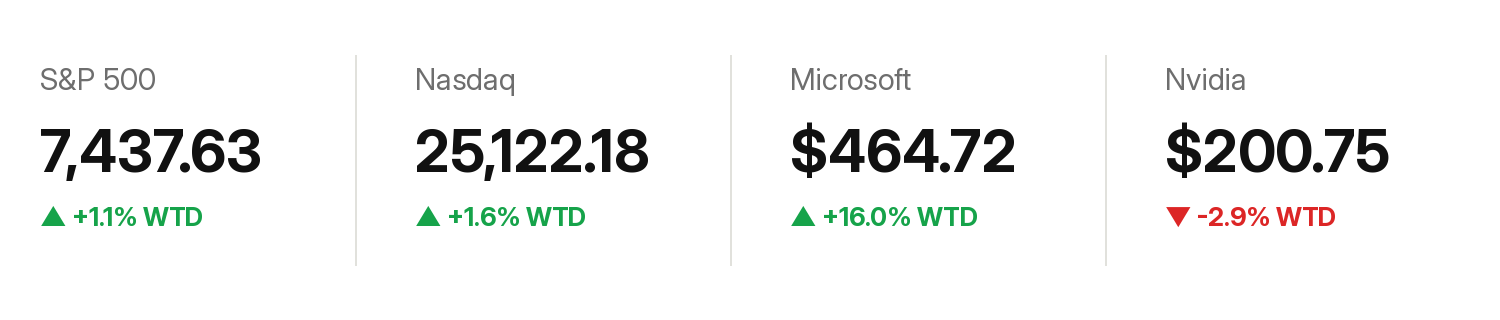
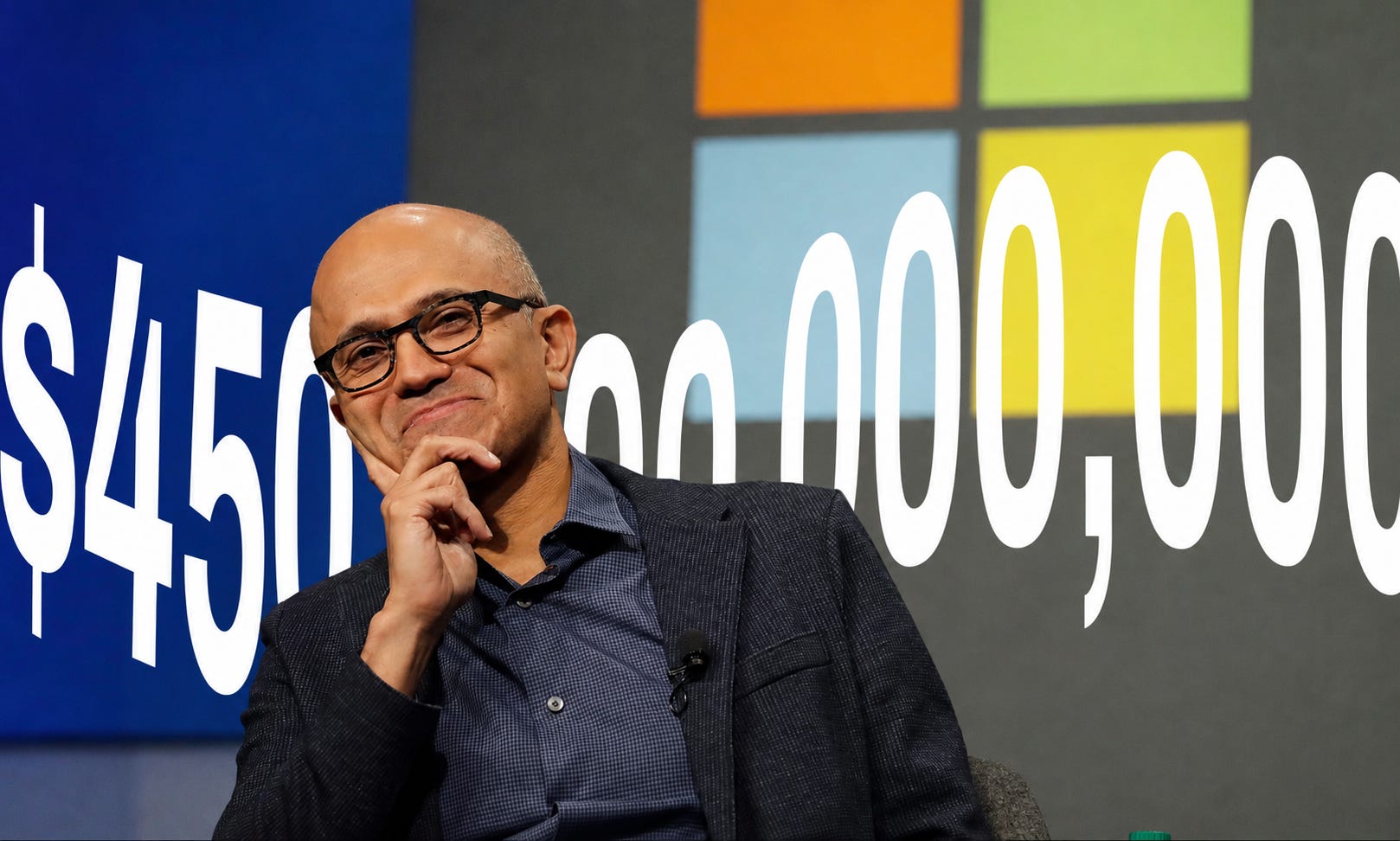
The number that mattered: Azure cloud revenue crossed $100 billion annually, proof that the company’s massive AI spending is actually turning into cash. The stock opened Thursday and never looked back, closing up 15.5%, the single biggest one-day gain in Microsoft’s history. It added roughly $450 billion in market value in one trading session. That’s more than the entire market cap of companies like Coca-Cola or Nike, gained in a single day.
Why markets reacted
For weeks, investors had been asking one question about every AI company: is all this money spent on data centers actually making it back, or just burning cash on a promise? Alphabet had already crashed for vague spending plans. Meta would lose many investors too, for the same reason. Microsoft walked in and gave the market exactly what it wanted: real revenue growth tied directly to AI infrastructure.
Market impact
Microsoft (MSFT) surged +15.5% Thursday, its biggest single-day gain ever
Microsoft added approximately $450 billion in market value in one session
S&P 500 gained +1.7%, with the Information Technology sector up +5.2%
Nasdaq Composite rose +2.8%
VIX (fear gauge) fell 17.28% to 17.09 as panic left the market
A Split Decision Within the Fed
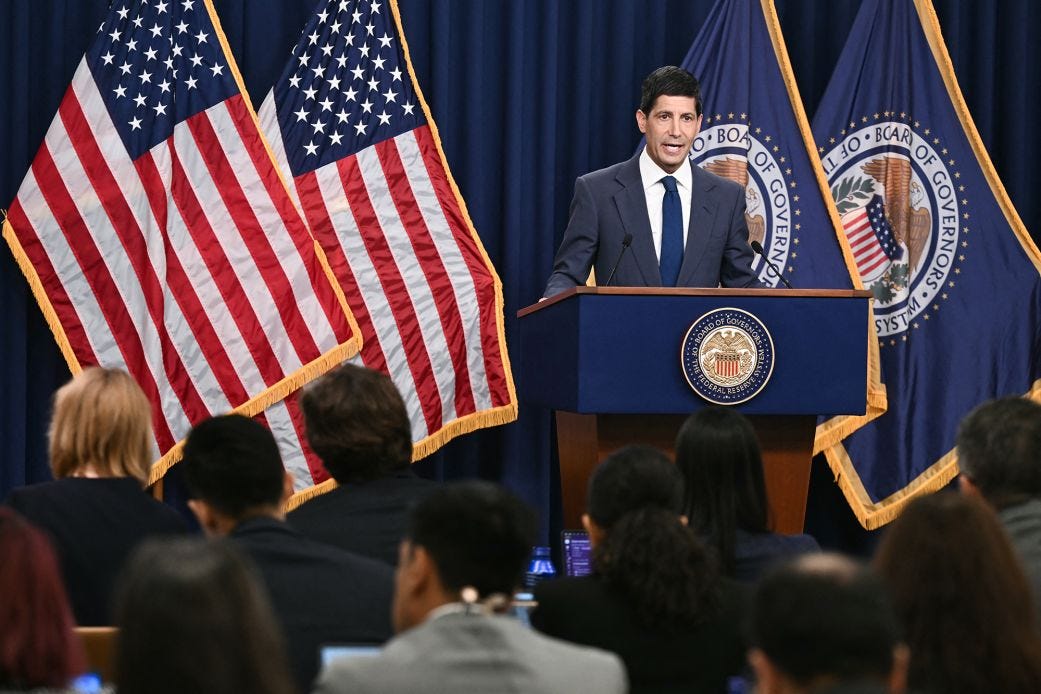
The Fed held rates steady at 3.50%-3.75% on Wednesday, the fifth straight meeting with no change. On paper, that’s completely normal. However, it wasn’t really.
Three Fed officials dissented from the decision, arguing rates should go up, not stay flat. That’s rare. Fed decisions are almost always close to unanimous, so three people publicly breaking from the group is a real signal that the committee is split on whether inflation is actually under control. A couple of days later, two of those dissenters explained their thinking publicly, and both doubled down on the same worry: inflation isn’t finished.
Why markets reacted
Going into the meeting, oil had spiked to $100 a barrel on Iran tensions, the kind of shock that usually pushes a central bank toward hiking, not holding. Traders adjusted fast. In the week before the meeting, the odds of a rate hike nearly tripled, from 10.7% to 34.7%. So when the Fed held anyway, the market wasn’t just watching the decision, it was watching how divided the room was behind it. The dissent confirmed what traders suspected. The Fed isn’t confident inflation is done, it’s just choosing to wait one more month.
Market impact
Fed held rates steady at 3.50%-3.75%, fifth consecutive hold
Three FOMC members dissented, pushing for a rate increase
10-year Treasury yield climbed to 4.73%, the highest level since January 2025
Oil fell roughly 8% for the week, reducing the pressure on inflation
The Worst Month for Chips Since 2008

While Microsoft and Amazon were hitting record highs, the companies that actually build AI chips had their worst month since the 2008 financial crisis.
Here’s why. Alphabet and Meta both told investors they’re spending way more money on AI infrastructure this year. Meta alone raised its spending plan to $125 billion. But Meta only made $784 million in free cash flow, nowhere near enough to justify that kind of spending. Investors got spooked. Meta stock fell about 10% for the week. Alphabet had already dropped 15% the week before for the same reason.
That fear spread to chipmakers too. If the companies buying AI chips are getting punished for overspending, maybe the chip demand isn’t as strong as everyone thought. Micron fell about 41% from its recent high.
Then Friday flipped the story completely. South Korea’s stock market had its best day ever. The KOSPI jumped 17.91% in a single day, the biggest gain in its history. Samsung rose 27%. SK Hynix hit its daily trading limit. Why? Confirmed chip shortages. Turns out demand for AI chips isn’t slowing down at all, there just aren’t enough chips to go around.
Market impact
Chipmakers had their worst month since 2008
Micron fell about 41% from its high
Meta dropped 10% for the week
Alphabet fell 15% the week before
South Korea’s KOSPI jumped 17.91% in one day, a record
Samsung gained 27%
Looking Ahead,
Next week centers on the July jobs report, out Friday, August 7, the next real test of whether the Fed made the right call. Earnings continue too, with Palantir, AMD, Caterpillar, and Eli Lilly all reporting. Traders think there's an 82% chance the Fed raises rates in September. That number can shift fast depending on what the jobs report shows.
Stay tuned for next week,
— WallStreetWagon