


![Winning at Shelf | 4 Rules to Dominate Retail Spaces [Updated]](https://substackcdn.com/image/fetch/$s_!YqyP!,f_auto,q_auto:good,fl_progressive:steep/https%3A%2F%2Fsubstack-post-media.s3.amazonaws.com%2Fpublic%2Fimages%2Fe68af1b4-85a5-456d-8daa-6ba0eaf147d6_2300x1592.jpeg "Winning at Shelf | 4 Rules to Dominate Retail Spaces [Updated]")
Do you ever look at a price tag and think, why does this cost this much?
The answer, almost always, comes down to two forces: supply and demand.
Demand: Why Price Changes Who Buys
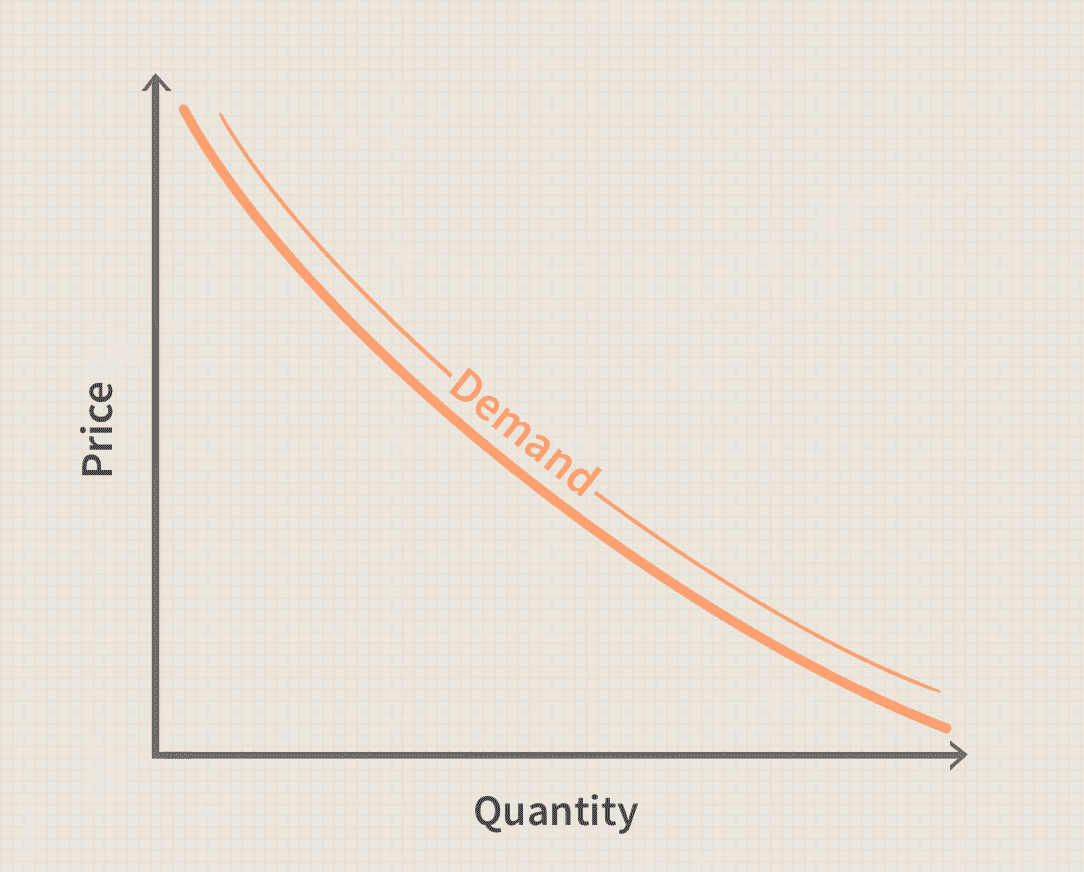
Let’s use pizza as our example. If a pizza costs $100, almost no one is going to buy one. It’s just not worth it. But if the price drops to $30, suddenly a lot more people are interested. It feels like a reasonable deal. Drop it further to $10, and now almost everyone is on board. This is the core idea behind demand: the lower the price, the higher the demand, meaning more and more customers are willing to buy the product as it becomes cheaper.
Think about your own decisions as a consumer. There are probably things you’d buy if they were cheaper, but don’t because the price feels too high. That exact calculation, happening across millions of people simultaneously, is what shapes the demand for any product.
We can represent demand visually as a curve on a graph, with price on the vertical axis and quantity on the horizontal. Because demand rises as price falls, the demand curve slopes downward from left to right.
Supply: Why Price Changes Who Sells
Pizzas don’t appear out of thin air: someone has to make them. And just like customers respond to price, so do the suppliers producing the product.
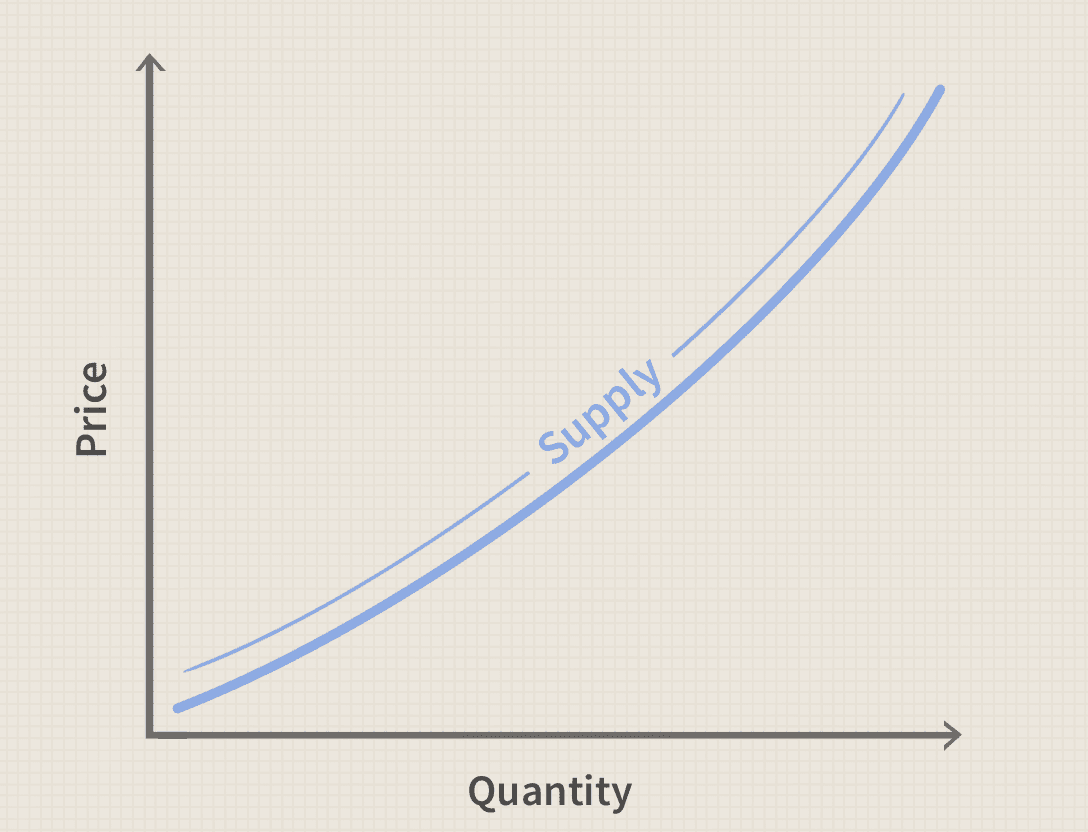
If a pizza sells for $100, every supplier wants to make as many as possible. The profit margin is enormous, and it’s absolutely worth their time and resources. But when the price drops to $30, suppliers have far less incentive to produce. Their costs, ingredients, labor, energy, stay roughly the same, but their revenue shrinks. Drop the price low enough, and it’s simply not worth making pizzas at all.
This is the concept of supply: the higher the price, the more of the product suppliers are willing to bring to market. Unlike the demand curve, the supply curve slopes upward. As price rises, the quantity supplied rises with it.
The Equilibrium: Where Supply Meets Demand
So what should a pizza actually cost? This is where it gets interesting.
If the price is set too high, suppliers will produce far more pizzas than customers want to buy. Pizzerias are stuck with unsold inventory such as wasted ingredients, wasted labor, wasted money. If the price is set too low, the opposite happens: customers want more pizzas than suppliers are willing to make, leading to shortages and upset buyers who can’t get what they want.
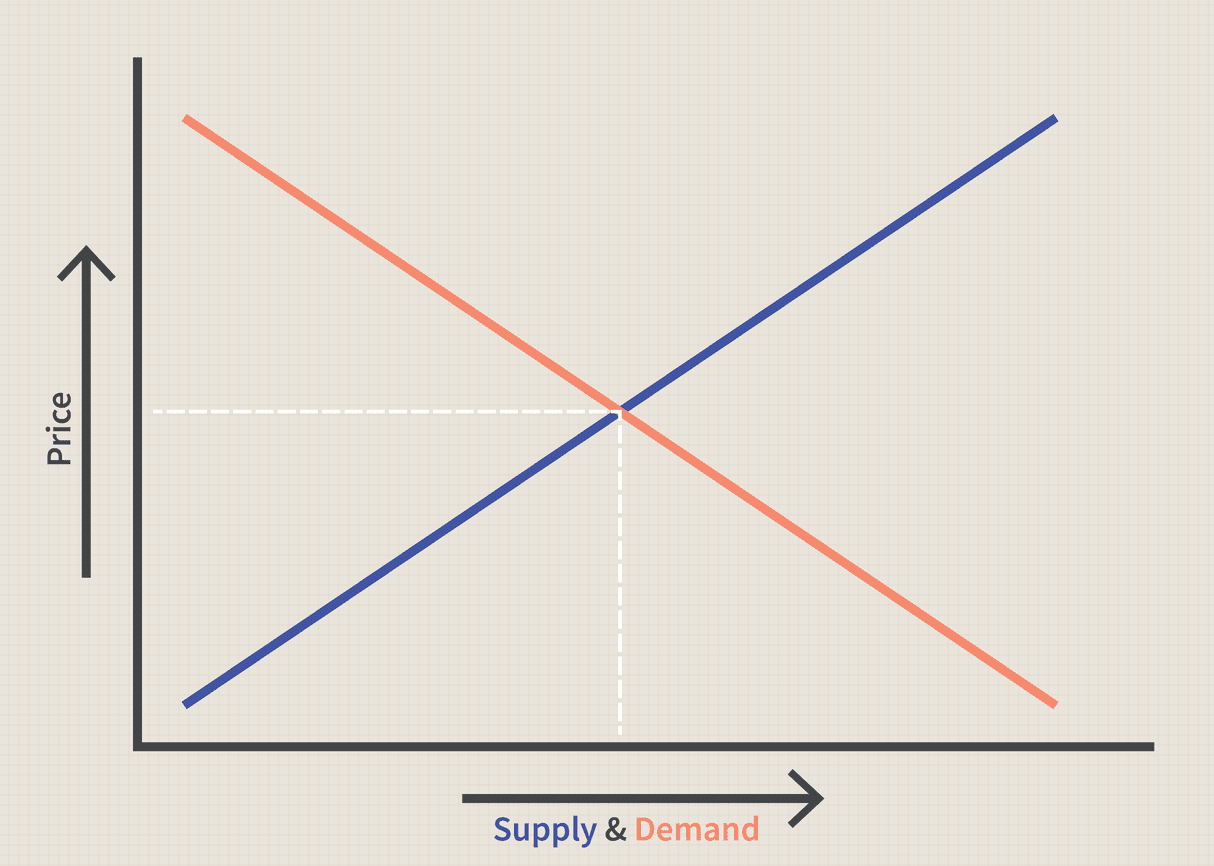
Somewhere between these two extremes is a price that works for everyone. This is called the equilibrium price: the point where the quantity supplied equals the quantity demanded. Suppliers produce exactly as much as customers want to buy. No surplus, no shortage. The market clears perfectly.
On a graph, we find this by overlaying the supply and demand curves. The equilibrium is simply the point where the two curves intersect.
What Happens When the Curves Shift
The equilibrium isn’t fixed forever, it changes whenever supply or demand shifts due to outside forces.
If demand increases (meaning that at any given price, more people want to buy the product than before), the demand curve shifts to the right. This pushes the equilibrium price upward. Think about what happens to umbrella prices when a storm is forecast: same umbrellas, but suddenly everyone wants one.
If demand decreases: fewer people want the product at any given price, The curve shifts left, pulling prices down.
Supply works the same way. If suppliers can produce more than before at any given price (ex: raw materials got cheaper), the supply curve shifts right, and prices tend to go down. If supply is constrained (ex: a drought; a shortage of materials), the curve shifts left, and prices rise.
These shifts are happening constantly across every market in the world, which is why prices are always moving.
Let’s look at one last example: the food on a plane.
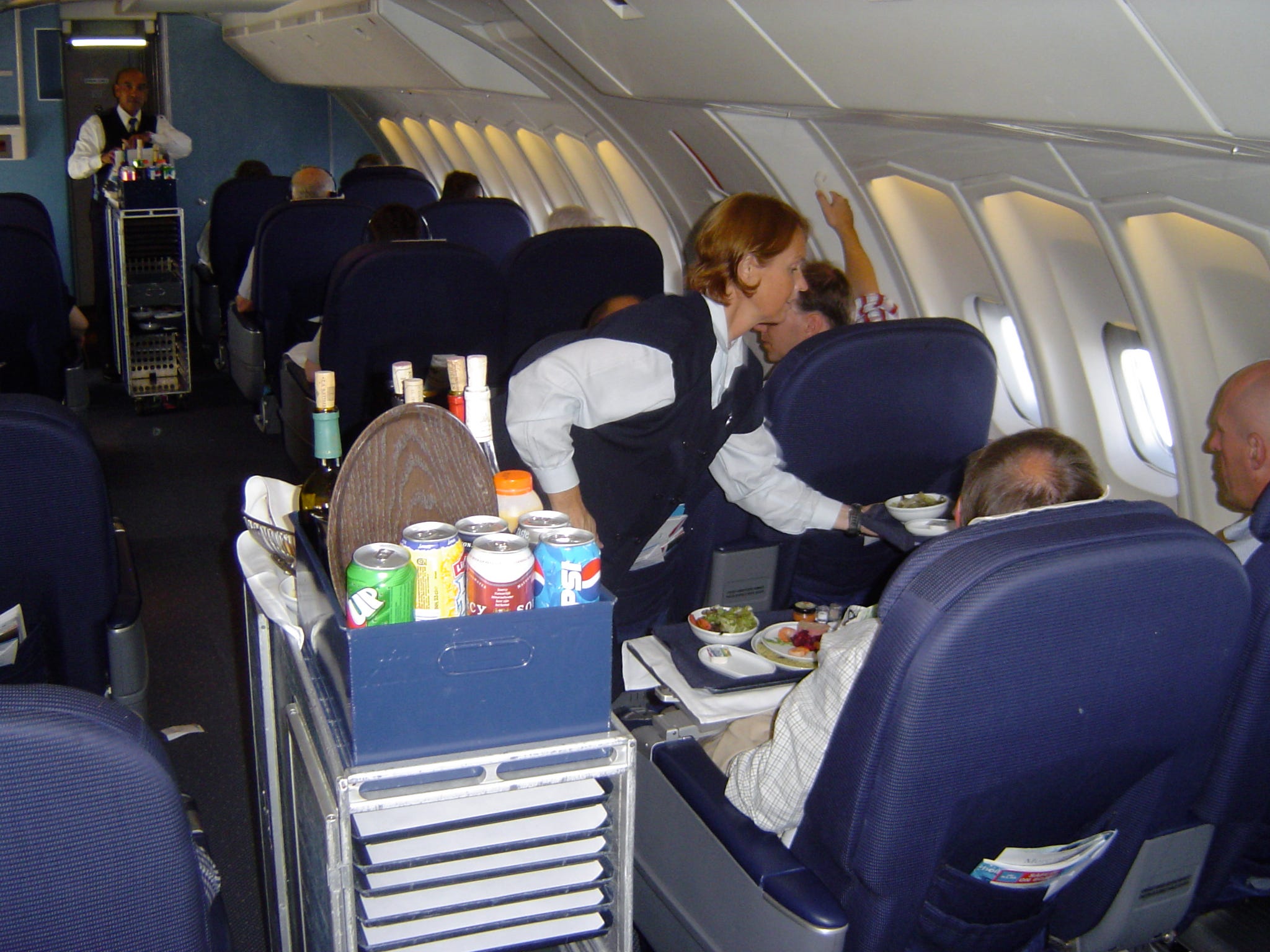
Why does a small bag of chips cost $6 on an airplane, when the same bag costs $1.50 at a gas station?
Consider the supply side first. An airplane is an extremely limited space. The airline can only carry so many snacks on board, and restocking mid-flight isn’t exactly an option. Supply is far lower than in any ordinary retail situation.
Now look at the demand side. Passengers have been sitting for hours. They’re uncomfortable, bored, and hungry. There are no other options available: no grocery store, no restaurant, no vending machine. Their demand for food is unusually high.
Low supply and high demand push the equilibrium price far above what you’d expect in any other context. It’s not the airline being greedy — it’s just the mechanics of supply and demand playing out in an extreme environment.
Same snack. Completely different market conditions. Completely different price.
Beyond the Classroom
Supply and demand isn't just a concept you learn in an economics class and forget. It's the invisible mechanism setting prices everywhere around you, from concert tickets to gas prices to the coffee you bought this morning. Once you understand it, you'll start seeing it everywhere.
— WallstreetWagon
Great insights, thanks for sharing!
This is super interesting! I am learning quite a bit.