

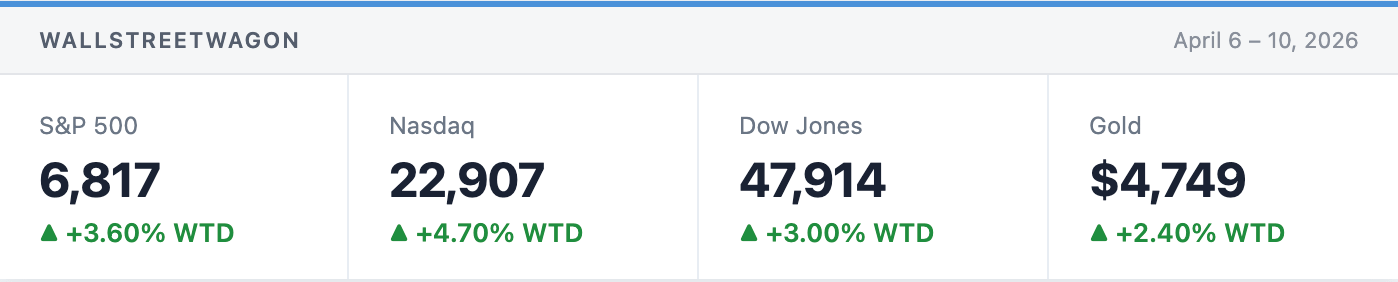
Trump Pauses the War in Iran, Stocks Explode
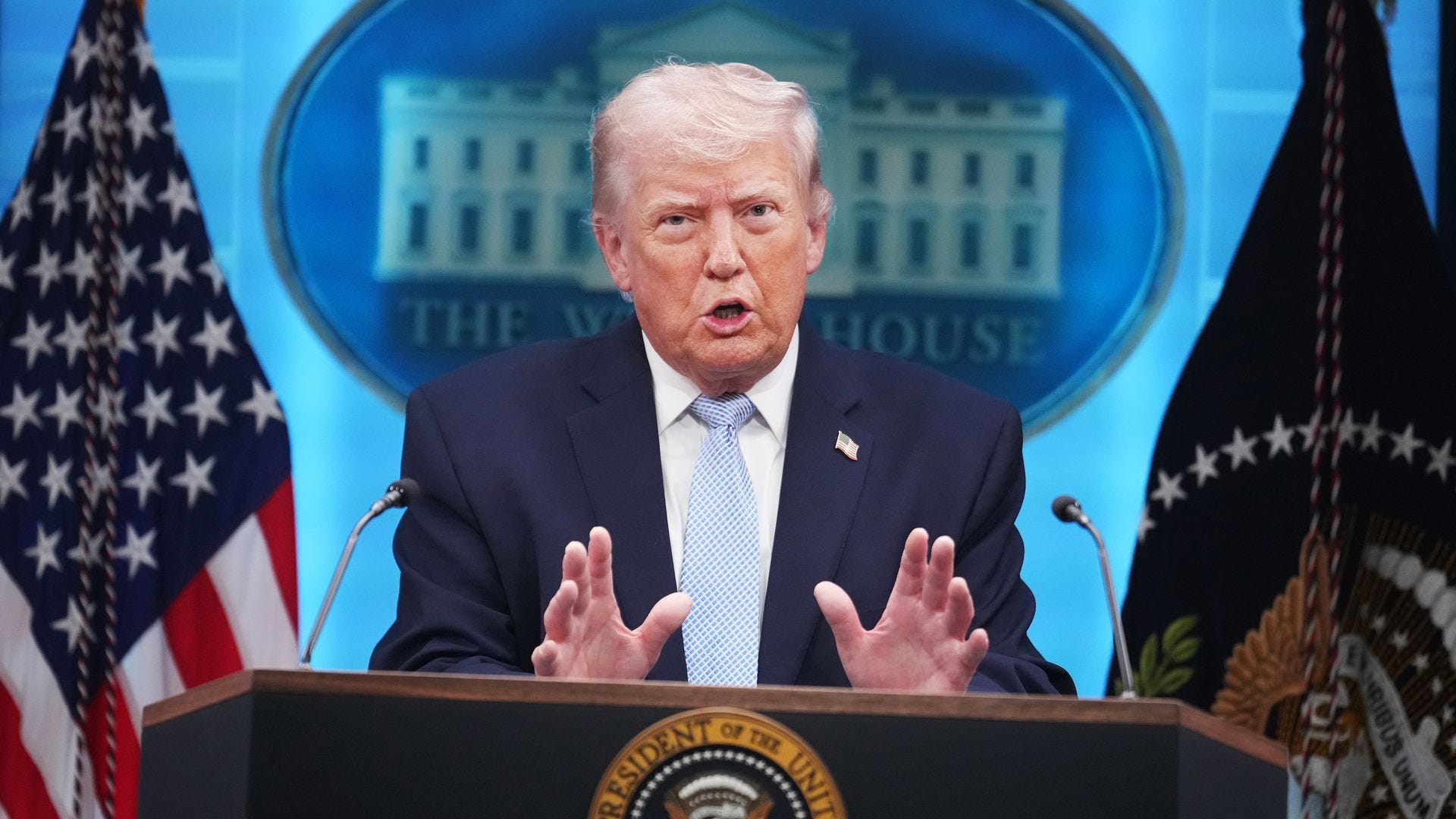
Just before his own Tuesday deadline, Trump posted on Truth Social that he was suspending bombing Iran for two weeks after receiving a 10-point peace proposal from Tehran. The announcement triggered one of the biggest single-day market rallies of 2026. Oil dropped over 16% on Wednesday alone. This drop was the single biggest day fall since April 2020. By Friday, VP JD Vance was heading to Islamabad to lead peace talks over the weekend.
Why markets reacted
A ceasefire = possible Hormuz reopening = oil falls = inflation cools = rate cuts back in play
Market prices had been increasing over six weeks of war. Any change triggers a massive release of pressure, aka a fall of prices
The Dow turned positive for 2026 for the first time since the war began
Market impact
Dow surged 1,325 points on Wednesday: its best single day since April 2025
S&P 500 up over 3% for the week having its best week since November
Airlines, travel, and consumer stocks bounced sharply
Brent crude dropped 11% on the week, its largest weekly fall in nearly 10 months
Inflation jumped. Blame the War
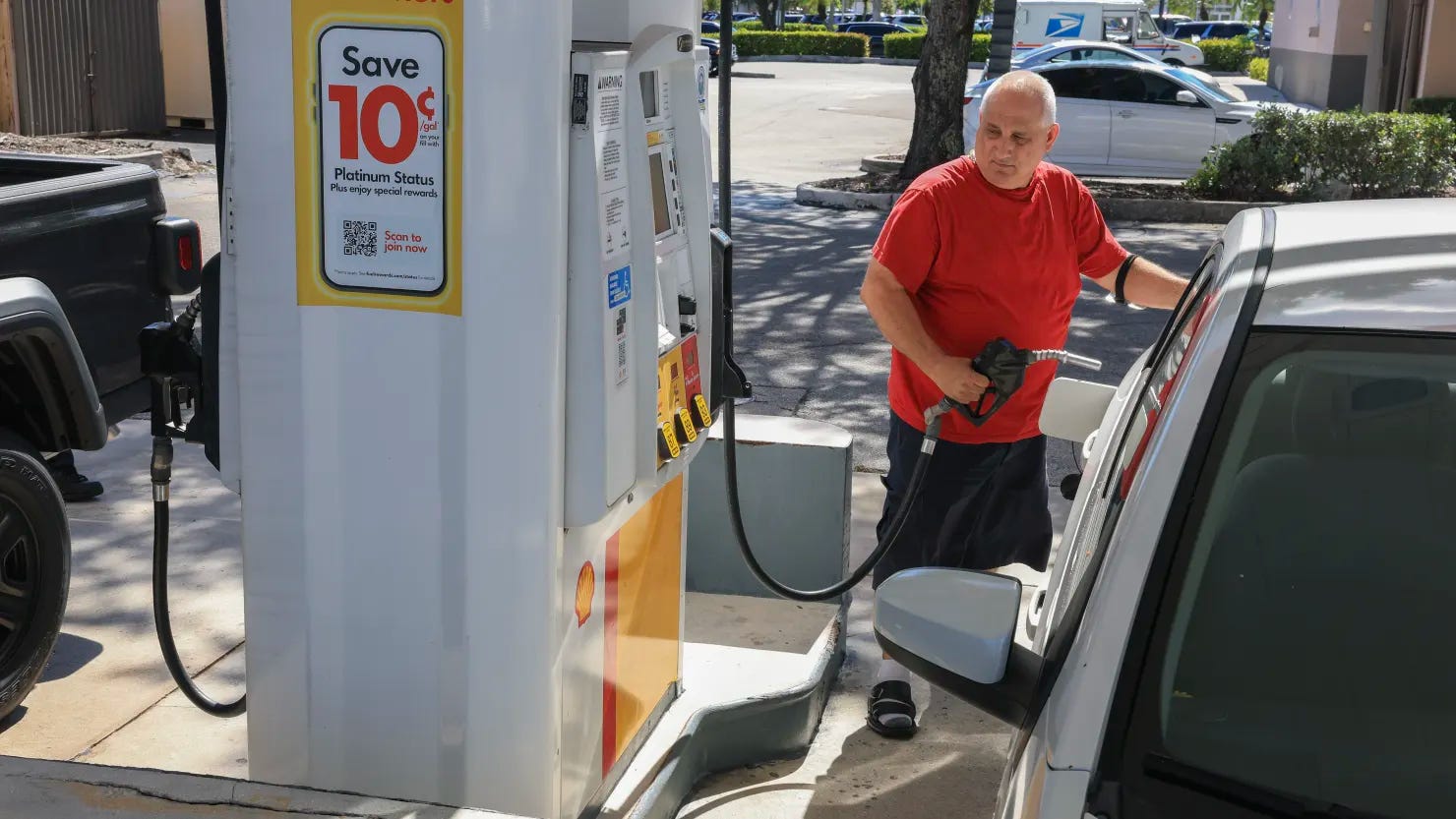
Friday's CPI report showed inflation jumped 0.9% in March, driven almost entirely by the war-driven spikes in gas prices, which rose 18% in a single month.
The CPI (Consumer Price Index) measures how much everyday prices like gas, groceries, and rent have changed compared to a year ago. When it rises, it means life is getting more expensive.
Annual inflation hit 3.3%. But core CPI, which considers food and energy, came in at just 0.2% below expectations. The data shows that this part of the market hasn’t reacted yet to the shock of the lack of oil supply.
Why markets reacted
The inflation number looked bad on paper, but WallStreet wasn’t surprised. Investors had been preparing for incoming data, as oil and gas prices rose heavily. Lower rates were awaiting.
Core CPI staying low meant no wage-price spiral, which means the Fed doesn’t need to raise rates
The risk going forward: the longer oil stays above $90, the more likely energy inflation affects everyday prices
Market impact
Stocks were less devastating than expected which was relieving news
The Fed remains on hold: no rate cuts, but no increases either
CPI jumped from 2.4% to 3.3% in a single month. This might not sound like alot, however it is a huge bump, the biggest since 2022
Quarter 1 bank earnings kick off next week with Goldman Sachs and JPMorgan. It will be the first real look at how corporate America survived the war
The Strait Is Still Closed
This Ceasefire Has a Huge Problem
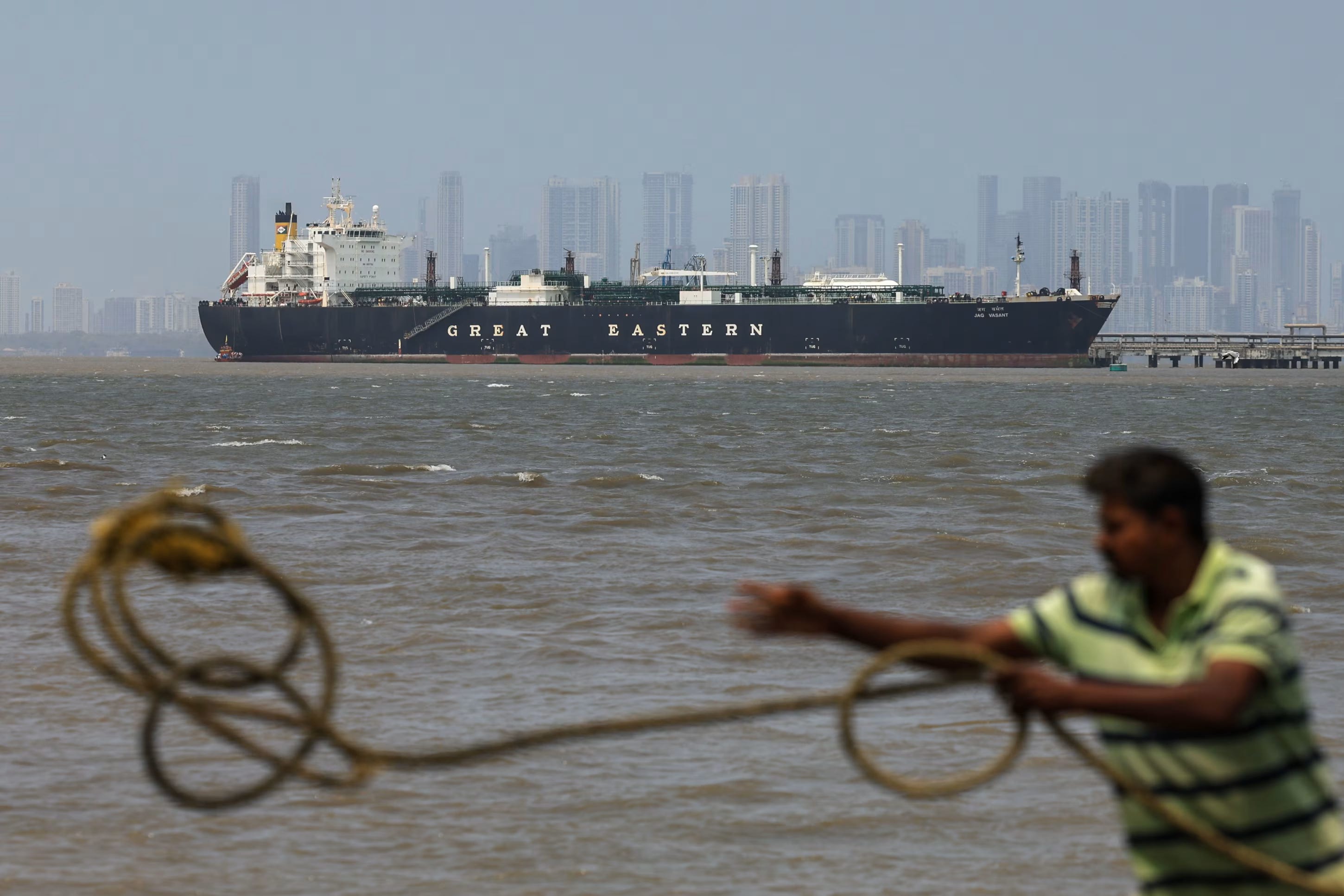
Despite the ceasefire deal, the Strait of Hormuz remains nearly shut. Reuters reported that tanker traffic through the waterway was still below 10% of normal volumes on Thursday. Iran is demanding ships obtain permits and pay tolls to pass through. however most shipping companies and insurers won’t accept. Meanwhile, Israel continued striking Hezbollah targets in Lebanon, which Iran called a violation of the ceasefire, putting the entire deal at risk.
Why markets reacted
A ceasefire that doesn’t reopen the Strait doesn’t actually fix the oil supply problem as prices stayed extremely high
Insurance costs for tankers trying to pass remain sky-high, keeping shipments stalled even without active combat
Americans are feeling the pain of $4+ gas and war anxiety, which threatens consumer spending that drives 70% of the U.S. economy
Market impact
Oil climbed back above $100 on Thursday as markets realized the Strait was still effectively closed
Shipping and airline stocks gave back some of their ceasefire gains
The weekend peace talks in Pakistan are now the single most important market event. A real deal that reopens Hormuz sends oil crashing and stocks surging; a breakdown reverses everything
(Pakistan is hosting the peace talk as it has equal relationships with both countries)
Looking ahead:
All eyes on the Pakistan peace talks this weekend between the U.S. and Iran. If a deal is struck that actually reopens the Strait of Hormuz, expect oil to collapse toward $70–80 and markets to surge into Q1 earnings season. If talks fail, oil is at continued risk of supply.
Thank you!
— WallStreetWagon
Enjoy your spring break! We won’t be posting as our team is busy
noice