


You’ve probably had this moment: you’re listening to Spotify for free, an ad interrupts your playlist, and you think, they must be making a killing off these ads.
They’re not. And that’s exactly what makes Spotify’s business model so interesting.
The Basic Setup
Spotify operates on a ‘freemium’ model. Free users get access to the entire music library with ads. Premium users pay around $11/month for ad-free listening, offline downloads, and better audio quality. Simple enough on the surface.
But here’s where it gets interesting.
Ads Are Almost Irrelevant
Ad-related profits sit at just 6.4% (Growthx). This means that for every dollar Spotify makes from ads, it barely keeps six cents after costs. Compare that to premium subscriptions, which carry dramatically higher margins. Ads exist mainly as a conversion tool. In reality, it’s a slightly annoying experience designed to push you toward paying $11/month, not as a serious revenue driver.
The Royalty Problem
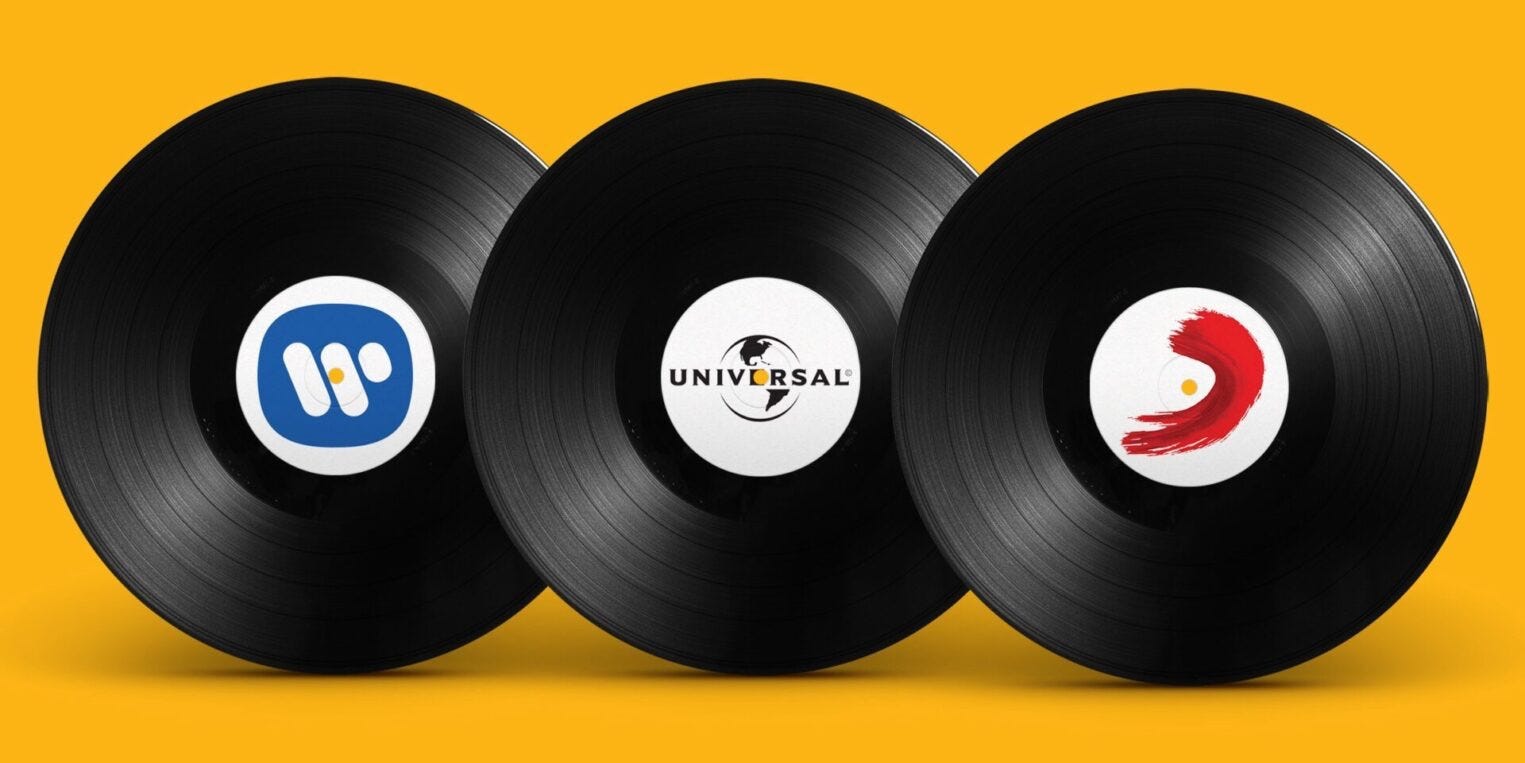
Here’s the core problem in Spotify’s business: it pays record labels close to 52% of revenue generated by each stream, and over 85% of music streamed belongs to just four labels: Sony, Universal, Warner, and Merlin. That’s four companies with enormous leverage over Spotify’s cost structure, and Spotify can’t really do anything about it.
This is why Spotify spent years barely profitable despite hundreds of millions of users. Revenue was growing, but so were royalty payments. The proportions were brutal.
So How Did They Fix It?
Two moves: podcasts and price increases.
Spotify went on a podcast acquisition spree. The streaming company bought The Ringer, Gimlet Media, and most famously signing Joe Rogan, all because podcasts carry far higher margins than music. No major label to pay. Podcast content costs a fraction of music royalties and keeps users on the platform longer.

Then in 2023, Spotify raised prices across most markets for the first time in years. By 2024, average revenue per user climbed to €4.62, the highest it had been in five years.
The result? Spotify posted its first annual net profit in 2024 of €1.1 billion after years of losses.
The Bigger Picture
What Spotify is really building is an audio platform, not a music app. Music gets you in the door. Podcasts, audiobooks, and eventually video keep you there, at margins that actually make sense.
The bet is that if Spotify owns enough of your listening time across enough content categories, it becomes too embedded in your daily routine to leave. That’s the real advantage, not the music catalog that everyone has.
Next time that ad interrupts your playlist, remember: Spotify doesn’t actually want your ad revenue. It wants your $11.
That's our first ‘Behind the Brand’. Drop a comment and tell us which company we should break down next!
— WallstreetWagon
Love this!